
 by
by Revamp your blog with our food photography tips for bloggers. Master the art and technicalities now.
The Art of Food Photography
In the realm of food blogging, one aspect stands out as crucial for attracting and engaging readers: food photography. This visual element can make or break your blog’s success, making it a vital skill to master. This section will explore the importance of food photography in blogging and the basics of good food photography.
Importance of Food Photography in Blogging
Food photography plays a pivotal role in the success of a food blog. High-quality, appealing images of food can significantly enhance a blog’s visual appeal, setting it apart from competitors and making it more attractive to potential readers. Furthermore, food photography is not just about taking pictures of food; it’s about telling a story, evoking emotions, and enticing readers to try the recipes or visit the restaurants you’re writing about.
Research has shown that blogs with high-quality images receive more views and engagement than those without. In fact, posts with images produce 650% higher engagement than text-only posts. Thus, mastering food photography can significantly increase your blog’s visibility and reach.
| Blog Post Type | Engagement Rate |
|---|---|
| Text-only | 1x |
| With images | 6.5x |
For food bloggers, investing time and effort into enhancing your food photography skills can significantly boost your blog’s performance. Whether you’re blogging about trending food topics, sharing vegetarian food blog ideas, or exploring seasonal food blog ideas, compelling imagery is key.
Basics of Good Food Photography
The basics of good food photography revolve around three main aspects: lighting, composition, and post-processing.
Lighting plays a critical role in food photography. Natural light is often the best choice as it highlights the food’s natural colors and textures. However, artificial lighting can also be used effectively with the right techniques.
Composition refers to how the elements in a photo are arranged. This includes the food, props, and background. The goal is to guide the viewer’s eye through the image, highlighting the most important parts of the scene.
Finally, post-processing involves editing the photos after they’ve been taken. This includes adjusting the brightness, contrast, saturation, cropping and straightening the image, and applying any necessary filters or effects.
Mastering these basics is the first step towards improving your food photography skills. As you become more comfortable with these techniques, you can start experimenting with more advanced concepts and techniques, further enhancing your ability to create stunning food images for your blog.
In the following sections, we’ll delve deeper into the technical aspects of food photography, offer creative tips for capturing stunning food photos, and discuss post-production techniques to help you enhance your food images further. Stay tuned for more food photography tips for bloggers.
Mastering the Technical Aspects
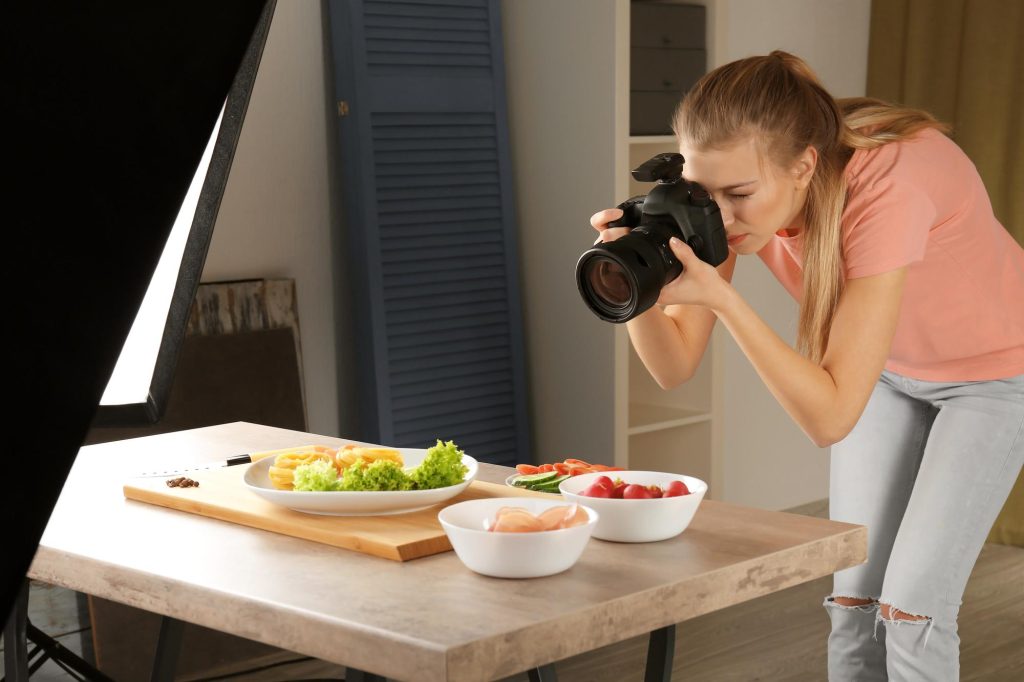
A significant part of improving your food photography skills involves mastering the technical aspects of the craft. This includes understanding your camera settings, knowing the role of lighting, and grasping the importance of composition. These elements are crucial in capturing appetizing and visually stunning food photos.
Understanding Camera Settings
When it comes to camera settings, there are three key elements to consider: aperture, shutter speed, and ISO. The aperture controls the amount of light entering the camera and affects the depth of field. A lower aperture number (e.g., f/2.8) will create a shallow depth of field, making the subject of the photo stand out against a blurred background.
The shutter speed determines how long the camera’s sensor is exposed to light. Faster shutter speeds (e.g., 1/500) can freeze action, while slower speeds (e.g., 1/30) can create motion blur. For most food photography, a fast shutter speed is appropriate.
Finally, the ISO affects the camera’s sensitivity to light. A higher ISO number will brighten the image but may introduce noise or graininess. For food photography, it’s best to keep the ISO as low as possible to preserve image quality.
| Camera Setting | Function | Ideal for Food Photography |
|---|---|---|
| Aperture | Controls light; affects depth of field | Low number (e.g., f/2.8) |
| Shutter Speed | Controls exposure time | Fast (e.g., 1/500) |
| ISO | Controls light sensitivity | Low (e.g., 100) |
The Role of Lighting in Food Photography
Lighting plays a crucial role in food photography. It can highlight textures, emphasize colors, and create shadows, adding depth and dimension to your photos. Natural light is often preferred as it provides a soft, diffused look. However, artificial light can also be used effectively, especially when natural light is unavailable.
Remember that the direction of light is essential. Side light can create interesting shadows, while backlight can make the food look fresh and delicious.
The Importance of Composition
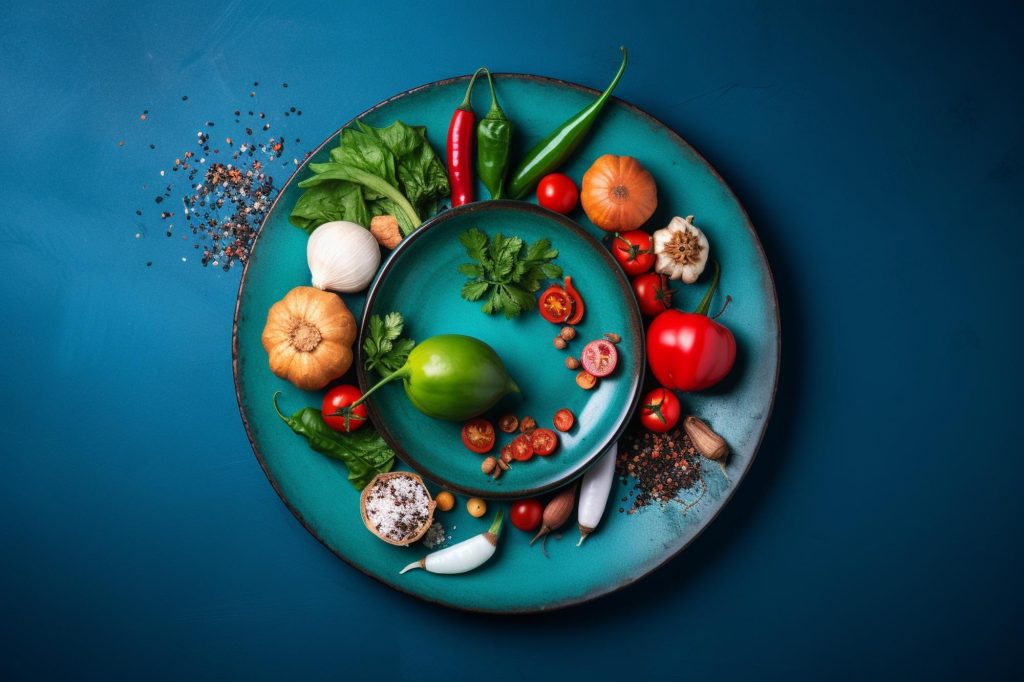
Composition refers to the arrangement of elements within a photo. A well-composed photo is balanced, visually interesting, and directs the viewer’s eye to the main subject. In food photography, composition can involve arranging the food, choosing a background, and deciding on the placement of props.
Several composition techniques can enhance your food photos. These include the rule of thirds, leading lines, and framing. Experimenting with these techniques can add variety and interest to your food photos, making them more engaging for your blog readers.
You can take your food photography to the next level by mastering these technical aspects. These food photography tips for bloggers can greatly enhance the visual appeal of your blog, attracting more readers and setting you apart in the competitive world of food blogging. For more content ideas for your food blog, check out our articles on food blog content ideas and trending food topics.
Creative Tips for Food Photography
One of the keys to enticing food photography lies in the photographer’s creativity. By playing with colors and textures, experimenting with angles and perspectives, and utilizing props and backgrounds, you can capture images that are as delicious as the dishes themselves. Here are some food photography tips for bloggers to help you make your food photos stand out.
Playing with Colors and Textures
The variety of colors and textures in food provides a rich palette for photographers. When composing your shot, consider how the colors of your food contrast or complement each other. For example, a vibrant green salad might stand out beautifully against a bright red tomato soup. Similarly, the smooth texture of a pudding can be highlighted against the rough texture of a rustic wooden table.
One strategy is to use a color wheel to find complementary colors. These combinations can make your food photography more visually appealing.
In terms of texture, try incorporating a mix of smooth and rough or soft and crunchy elements in your images. This can make your photos more interesting and give viewers a sense of the food’s texture and taste.
Experimenting with Angles and Perspectives
Angles and perspectives play a significant role in food photography. Traditional top-down shots are great for showcasing the layout of a dish but don’t be afraid to experiment with different angles.
Try shooting from the side to highlight the layers of a lasagna or the height of a stack of pancakes. Or get up close to capture the details of a garnish or the texture of a crust. By changing your perspective, you can create unique and intriguing images that draw viewers in.
Remember, the goal is to make the food look as tasty as possible, so experiment with different angles and perspectives until you find the one that presents your dish in the best light.

The Use of Props and Backgrounds
Props and backgrounds can add depth and context to your food photography. They can help tell a story, evoke a mood, or simply add visual interest.
Choose props that complement the food without distracting from it. This could be cutlery, napkins, ingredients, or cooking utensils. Keep in mind the theme and style of your food blog when selecting props. For example, a rustic wooden board might suit a farm-to-table blog, while a sleek marble countertop might be perfect for a modern, minimalist blog.
Backgrounds are equally important in food photography. They set the stage for your food and can either enhance or detract from the main subject. Choose backgrounds that contrast with your food to make it stand out.
Remember, less is often more in food photography. Avoid overly busy or cluttered backgrounds and props that can distract from the food. The focus should always be on the delicious dish you’re showcasing.
By incorporating these creative food photography tips into your blog, you can create visually appealing and mouth-watering photos that will captivate your audience and elevate your food blog to new levels. For more inspiration, check out our articles on food blog content ideas and trending food topics.
Post-Production Techniques
After capturing the perfect shot, the post-production process begins. This is where the magic really happens. Through editing and enhancement, one can transform a good food photograph into a great one. This process is crucial in creating engaging blog content that attracts and retains readers.
Basic Photo Editing Tips
When it comes to food photography, even the most minor editing tweaks can have a significant impact. Here are some basic photo editing tips that can elevate your food photos:
- Brightness and Contrast: Adjusting the brightness and contrast can significantly enhance the overall look of the image. A slight increase in brightness can make the food look more appealing while adjusting the contrast can bring out the details in the food.
- Saturation and Vibrance: Food photography often benefits from vibrant colors. However, striking a balance is important – oversaturated images can look artificial. A moderate increase in vibrance can bring out the natural colors without making them look too intense.
- Sharpness: A slight increase in sharpness can make the textures in the food stand out, creating a more appealing image. However, be careful not to overdo it, as too much sharpness can make the image look harsh.
- Cropping: Cropping can help to remove unnecessary elements from the frame and draw focus to the food. A well-cropped image can make the food the star of the show.
- White Balance: Adjusting the white balance can correct color casts caused by different light sources. This can help to make the colors in the food look more natural.
These tips and the right camera settings and composition techniques can enhance your food photography, making your blog posts more engaging. For more content ideas on food photography, check out our comprehensive guide on food blog content ideas.
Enhancing Food Images with Filters and Tools
In addition to basic editing, bloggers can also use filters and tools to enhance their food photos further.
- Filters: Using filters can quickly change the mood and feeling of the image. However, it’s important to choose filters that complement the food and the blog’s overall theme.
- Detail Enhancement Tools: Tools that enhance details can bring out the textures and patterns in the food, making the image more appealing.
- Color Correction Tools: These tools can help to correct color imbalances and make the food look more natural and appealing.
- Noise Reduction Tools: These tools can help to reduce digital noise in the image, especially in images shot in low light conditions.
- Blur Tools: Using blur tools can help to create depth in the image, drawing focus towards the food.
Remember, the goal of editing and enhancing food photos is not to create an unrealistic image but to highlight the best features of the food and make it look as delicious and appealing as possible. For more tips and inspiration on food blogging, explore our list of food blog niche ideas.
Overcoming Common Food Photography Challenges
Food photography is an art that comes with its unique set of challenges. From dealing with difficult food subjects to maintaining food freshness during shoots and balancing natural and artificial lighting, these hurdles require creative solutions.
Dealing with Difficult Food Subjects
In food photography, some foods are naturally more photogenic than others. But there are times when you will need to photograph food items that are not visually appealing. To make these dishes stand out, consider focusing on texture, color, and overall presentation.
For instance, a bowl of oatmeal might not be the most exciting food to photograph, but it can become quite appealing when garnished with vibrant fruits like blueberries, strawberries, or a sprinkle of cinnamon. Experimenting with serving dishes and backgrounds can also help elevate the visual appeal of the food.
Remember, the goal is to entice your audience to try the recipe or visit the restaurant you’re reviewing on your blog. For more ideas on how to make the most out of challenging food subjects, check out our article on food blog content ideas.
Maintaining Food Freshness During Shoots
Maintaining the freshness of food during a shoot is crucial in making the dish look appetizing in photos. Over time, hot foods may cool down and look less appealing, while cold foods might melt or wilt.
One tip is to prepare all your props and camera settings before bringing out the food. This way, you can minimize the time the food spends out in the open. For dishes that need to stay hot, c
Consider using food steamers or warming trays to keep them at the right temperature. Ice packs or mini coolers can be used for cold items to maintain their freshness.
For more tips on handling different types of food during shoots, visit our article on seasonal food blog ideas.
Balancing Natural and Artificial Lighting
Lighting plays a significant role in food photography. While natural light often gives the best results, it can be unpredictable and inconsistent. On the other hand, artificial light provides more control but can sometimes make the food look unnatural if not used correctly.
If you’re shooting in natural light, try to set up your shoot near a window with plenty of indirect light. Overcast days are perfect for food photography as the clouds act as a natural diffuser, softening the light and reducing harsh shadows.
When using artificial light, be sure to balance it with ambient light to avoid harsh shadows and highlights. It’s also important to adjust the white balance on your camera to ensure the colors in your photos are accurate.
For more detailed insights on effectively using natural and artificial lighting, check out our article on food blog niche ideas.
These are just a few of the common challenges you might face in food photography. By applying these food photography tips for bloggers, you can overcome these hurdles and create stunning images that will captivate your audience and enhance your blog posts.