

 by
by Explore how AI in content creation reshapes blogging. Efficiency, SEO, and authenticity revealed.
Introduction to AI in Content Creation
The advent of artificial intelligence (AI) has revolutionized various sectors, and content creation is no exception. The use of AI in content creation is transforming how bloggers generate, curate, and optimize content, reshaping the blogging landscape.
Brief History of AI in Content Creation
The journey of AI in content creation has been progressive. The inception of AI in this realm primarily focused on data analysis, keyword optimization, and basic content curation. As time progressed, AI capabilities expanded to include more sophisticated tasks such as automatic content generation, sentiment analysis, and content personalization.
AI powered chatbots, for instance, have been integral in enhancing customer engagement on blogs. These chatbots, capable of answering queries and providing information, have significantly improved the user experience on many blogging platforms. You can learn more about this in our article on AI chatbots for blogging.
In recent years, AI has advanced to the point where it can generate entire blog posts, something that was once thought impossible. This shift has been driven mainly by generative AI, which uses machine learning algorithms to produce unique content. Our article on AI generated blog posts provides a deeper dive into this fascinating development.
Understanding How AI Works in Content Creation
At the heart of AI in content creation is machine learning, a subset of AI that enables machines to learn from data and improve over time without being explicitly programmed. In the context of content creation, machine learning algorithms can analyze vast amounts of data, identify patterns, and generate content based on these insights.
One popular application of AI in content creation is AI writing assistants. These tools leverage natural language processing (NLP), a field of AI that enables machines to understand and generate human language. An AI writing assistant can suggest grammar, tone, and style improvements, provide content ideas, and even write portions of the text. More about this can be found in our article on AI writing assistants.
Furthermore, AI has been instrumental in personalizing content for readers. AI can generate personalized recommendations by analyzing user behavior data, enhancing the reader’s experience and engagement. This aspect of AI in content creation is explored in more detail in our article on AI and personalized content.
In essence, AI in content creation involves using advanced algorithms and machine learning techniques to automate and enhance various aspects of the content creation process. As AI continues to evolve, it’s poised to offer even more exciting possibilities in the world of content creation.
The Role of AI in Modern Content Creation
Artificial intelligence has come a long way in empowering content creators. It’s not just about automating tasks anymore; AI is now playing a more significant role in the creative process itself. Here, we examine the current use cases of AI in content creation and forecast the future trends in this exciting field.

Current Use Cases of AI in Content Creation
The use of AI in content creation is not a futuristic concept; it’s already happening. From drafting articles to optimizing SEO, artificial intelligence is being used in a variety of ways:
- AI Writing Assistants: These tools assist content creators by suggesting improvements in grammar, tone, and style. They can also generate ideas for blog posts, making the brainstorming process more efficient. More about this can be explored in our article on AI writing assistants.
- Automated Content Generation: AI tools can now generate short-form content such as social media posts and product descriptions. They can even create long-form content like AI generated blog posts.
- SEO Optimization: AI is used to analyze and optimize SEO content, helping drive more organic traffic to blogs and websites. It can suggest the best keywords, meta descriptions, and more. Learn more about it in our article on AI and SEO friendly content.
- Chatbots: AI chatbots can interact with readers, answer their queries, and even suggest relevant content. They provide a personalized user experience, which can increase engagement and retention. Read more about AI chatbots for blogging.
Future Trends in AI and Content Creation
As technology evolves, so will the role of AI in content creation. Here are some future trends to watch out for:
- Content Personalization: AI will be able to analyze a reader’s behavior and preferences to deliver highly personalized content. This could significantly improve user engagement and conversion rates. Here’s an article on AI and personalized content for more insights.
- Content Curation: AI tools will become more sophisticated in curating content. They will be able to sift through vast amounts of online information and present the most relevant and high-quality content to the readers. Learn more about AI content curation tools.
- Voice Recognition and Generation: As voice search becomes more popular, AI will play a crucial role in optimizing content for voice search. It could also generate voice-based content for platforms like podcasts and audiobooks.
- Image and Video Creation: AI will not only be used for text-based content but also for creating engaging visuals and videos. It could potentially automate the entire video production process, from scripting to editing.
The use of AI in content creation is set to increase in the future, offering exciting possibilities for bloggers and content creators. However, it’s essential to strike a balance between leveraging AI for efficiency and maintaining the human touch that makes content relatable and engaging.
Advantages of Using AI in Content Creation
The use of AI in content creation offers various advantages, reshaping how bloggers create and optimize content. These benefits encompass efficiency and speed, content optimization and SEO, and data analysis and content personalization.
Efficiency and Speed
One of the primary benefits of using AI in content creation is the increased efficiency and speed it brings to the process. AI powered tools can generate content at a rate that surpasses human capabilities, significantly reducing the time required to produce articles.
For instance, an AI writing assistant can generate a draft article based on a given topic or set of keywords, thereby speeding up the brainstorming and writing process. This allows bloggers to focus more on refining and adding their unique touch to the content. You can learn more about these tools in our article on AI writing assistants.
Content Optimization and SEO
AI also plays a significant role in content optimization and SEO, helping bloggers create content that resonates well with both their readers and search engine algorithms. With the ability to analyze large data sets, AI can provide insights into trending topics, keyword usage, and optimal content structures.
Moreover, AI powered tools can offer real-time suggestions for improving readability, keyword density, and other SEO related factors. This can contribute to better search engine rankings, driving more traffic to the blog. For more information on this aspect, check out our article on AI and SEO friendly content.
Data Analysis and Content Personalization
AI is exceptionally proficient when it comes to analyzing large volumes of data. This capability can be leveraged in content creation to personalize the content for different audience segments. By analyzing user behavior, preferences, and interaction with previous content, AI can generate insights that can be used to tailor content to individual user needs.
AI driven content personalization can significantly improve user engagement and satisfaction, increasing retention rates and conversions. This approach can be instrumental in email marketing and social media marketing, where personalized content can significantly enhance the user experience. For a deeper understanding of this topic, visit our article on AI and personalized content.
Despite its potential drawbacks, the integration of AI in content creation presents a promising future for bloggers. By understanding how to use AI effectively, bloggers can unlock new levels of efficiency, optimization, and personalization in their content creation endeavors.

Potential Drawbacks of AI in Content Creation
As transformative as AI in content creation can be, it’s crucial to consider potential pitfalls. Understanding these challenges can help bloggers balance leveraging AI’s efficiency and maintaining human creativity.
Quality of Generated Content
A significant challenge with AI generated content is ensuring consistent quality. While AI can produce content quickly, the quality of that output might not always meet the desired standards. In some cases, the content generated by AI might lack the depth or nuance that a human writer can provide, leading to generic or superficial content.
For instance, the use of AI writing assistants or the generation of AI driven blog posts can sometimes result in grammatically correct content that lacks a clear narrative or engaging tone. This can be a significant drawback, especially when creating content that requires an emotional connection or a deep understanding of the audience.
Risk of Losing Authenticity
Another potential drawback of using AI in content creation is the risk of losing authenticity. One of the key elements that make content engaging and relatable is the unique voice and perspective of the writer. AI, while capable of mimicking human writing, might struggle to replicate a specific writer’s unique style and voice, potentially leading to content that feels impersonal or generic.
Moreover, while AI can analyze data and trends to create content that aligns with popular demand, it may struggle with creating content that pushes boundaries or challenges the status quo. This lack of authenticity and originality could lead to content that feels repetitive or lacks innovation.
Dependence on Data and Algorithms
The use of AI in content creation also brings forth the risk of over-dependence on data and algorithms. AI operates based on the data fed into it and the algorithms that drive its operations. These data and algorithms, while powerful, are not infallible and can sometimes lead to inaccuracies or biases in the content generated.
For instance, if the data used to train an AI is biased or inaccurate, this could lead to the generation of similarly biased or misinformed content. Additionally, an over-reliance on AI could potentially limit the opportunity for creative exploration and spontaneity that often leads to engaging and innovative content.
While these challenges exist, it’s important to remember that the use of AI in content creation is a tool, not a replacement for human creativity and insight. By being aware of these potential pitfalls, bloggers can effectively integrate AI into their content creation process, leveraging its strengths and mitigating its weaknesses. For more insights into balancing human creativity and AI efficiency, check out our article on artificial intelligence in blogging.
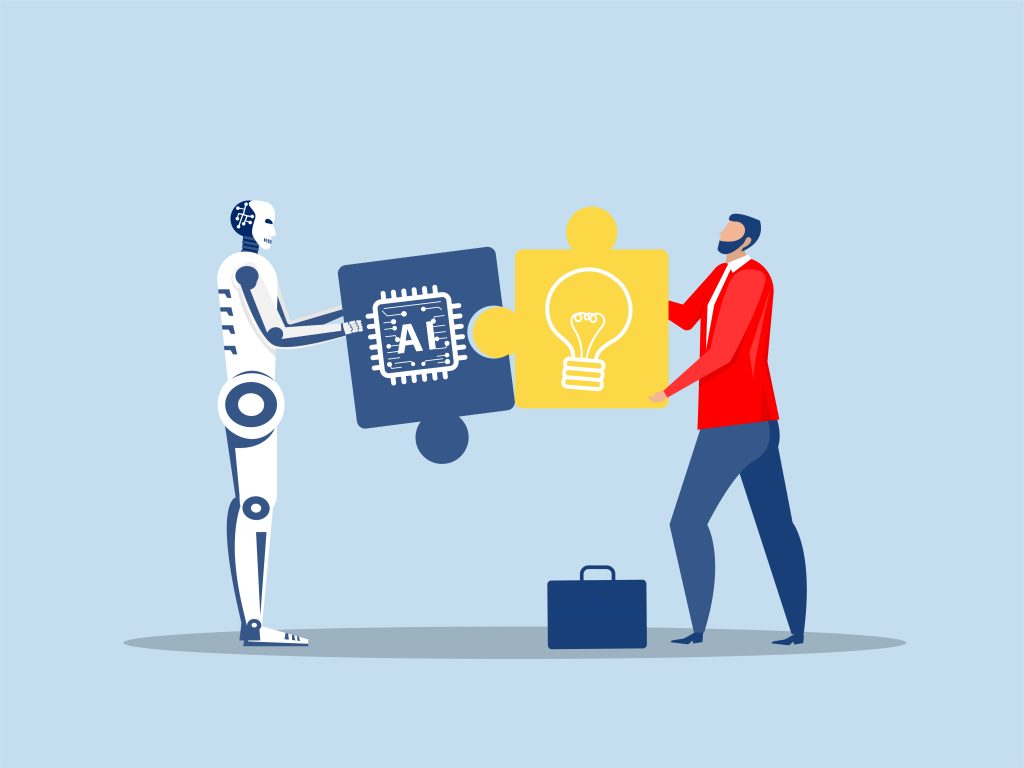
Balancing Human Creativity and AI Efficiency
The increasing application of AI in content creation has led to a new landscape in blogging and content marketing. As technology evolves, finding an optimal balance between human creativity and AI efficiency is important.
The Continuing Role of Human Content Creators
Despite the rapid advancements in AI technology, human content creators continue to play a critical role in the blogging landscape. While AI can generate content quickly, it cannot replicate the creative insights, emotional nuances, and personal experiences that human writers bring to their work.
Human content creators also have a better understanding of the target audience’s needs, preferences, and cultural nuances, which AI tools may not fully comprehend. This understanding is essential in creating engaging, relatable, and impactful content.
That said, AI can play a powerful supporting role. Tools like AI writing assistants can help human writers by providing suggestions for improving grammar, style, and SEO. AI powered tools can also aid in tasks like content curation, as found in our article on AI content curation tools.
Strategies for Integrating AI in the Content Creation Process
Integrating AI into the content creation process can lead to efficiency gains and improved content quality. Here are a few strategies to consider:
- Use AI Tools for Preliminary Research: AI can be used to gather data and conduct preliminary research on a topic. This can help human writers to focus more on the creative aspects of content creation.
- Leverage AI for SEO Optimization: AI can analyze content and suggest SEO improvements. Check out our article on AI and SEO friendly content for more insights.
- Use AI for Content Personalization: AI can help personalize content based on user behavior and preferences. Understanding AI’s role in personalized content can be found in our article on AI and personalized content.
- Implement AI Chatbots for User Engagement: AI chatbots can engage with the audience, answer their queries, and provide relevant content suggestions. For more information, see our article on AI chatbots for blogging.
Use AI for Content Analysis: AI can analyze content performance, providing valuable insights to guide future content creation efforts.
The optimal balance between human creativity and AI efficiency in content creation lies in collaboration. By leveraging both strengths, bloggers can create high-quality, SEO optimized, and personalized content that resonates with their audience.


